
Every article covering the August 2026 change to the site reputation policy of Google was written for the same audience. Publishers wondering whether their coupon hub or sponsored review section is exposed. Site owners deciding whether to keep a parasite subdirectory alive. Almost nothing has been written for the other side of that transaction, which is anyone who actually pays for guest posts and placements on those same host sites. If you buy guest posts instead of selling space for them, the EEA change quietly reshapes how much protection you can expect from Google enforcement, depending entirely on where your customers happen to be searching from.
Table of Contents
A Quick Refresher On What Actually Changed
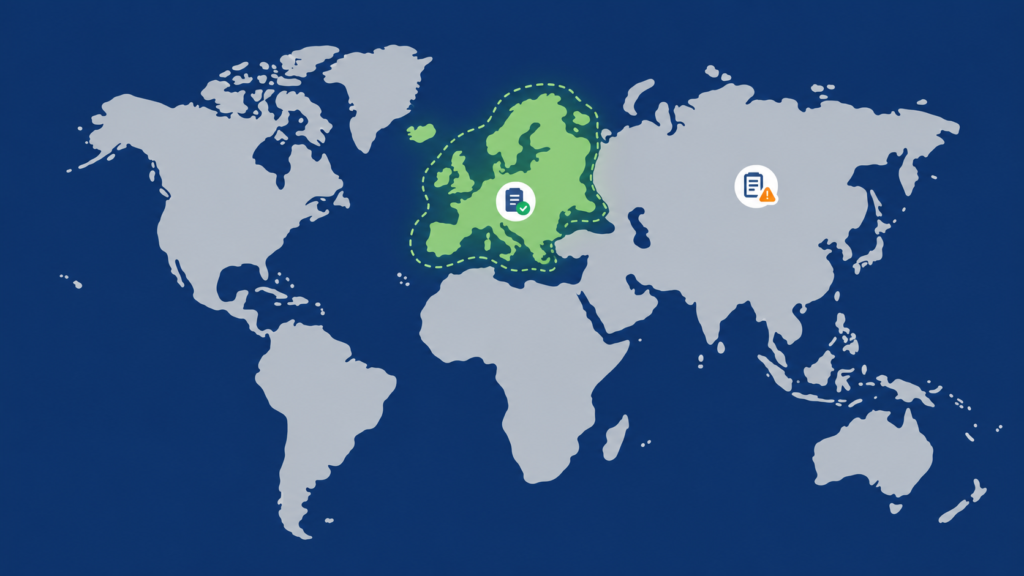
Google confirmed on August 28 2026 that manual actions under its site reputation policy would no longer affect search results shown to users inside the European Economic Area, effective August 30. Outside the EEA, a manual action still directly suppresses the affected section of a site exactly as before. Inside the EEA, that same manual action gets applied in Search Console for record keeping, but the affected pages instead get separated inside the systems Google runs to rank on their own merits instead of losing visibility outright.
This split exists because of pressure from the European Commission under the Digital Markets Act, not because Google decided the underlying behavior stopped being a problem. Google has said plainly that it still considers the tactic harmful and is only adjusting enforcement in this one region under regulatory pressure.
The Part Almost Nobody Mentions
Every announcement about this change, including the one from Google itself, specifically describes a carve out for manual actions. Site reputation abuse is not only enforced through manual review anymore. What began as a manual action only policy in 2024 has increasingly moved toward algorithmic detection as well, handled through the same SpamBrain systems that process link spam and other automated enforcement. The wording Google used around the EEA change addresses manual actions specifically and does not mention whether algorithmic devaluation of a flagged section works the same way inside the region.
This matters enormously for anyone trying to calculate how much real protection this split actually provides. If a meaningful share of site reputation enforcement today happens algorithmically rather than through a documented manual action, a guest post placement could still lose ranking value inside the EEA through that separate mechanism, even while sitting outside the specific carve out Google described. Nothing in the public announcement clarifies this either way, which means treating the EEA split as full protection rather than a narrower, manual action specific exception is an assumption, not a confirmed fact.
Why This Matters More For Buyers Than It First Appears
Every piece of coverage so far treats this as a publisher side story. But think about what a manual action under this policy is actually punishing. It targets a host site that published your paid guest post primarily to let it borrow the authority of that host. When Google suppresses that page outside the EEA, the placement you paid for stops delivering the ranking benefit you bought it for. Inside the EEA, that same placement keeps ranking independently instead of losing visibility, which means the value you paid for survives in a way it would not have outside that region.
In practical terms, a guest post placement that would have been quietly neutralized last year, if your traffic and audience sit primarily inside the EEA, may now hold onto more of its value than an identical placement would for a business targeting audiences outside Europe.
The Uncomfortable Flip Side
This is not simply good news dressed up as a technicality. A policy loophole that lets certain placements survive enforcement inside one region does not make the underlying content quality problem disappear. If the host site was thin, off topic, or existed mainly to sell links, readers inside the EEA still land on a page that offers them little real value. The ranking protection changed. The actual usefulness of the placement to a real reader did not.
There is also a practical risk in leaning on this split as a strategy rather than treating it as a side effect. Regulatory carve outs tied to ongoing DMA proceedings are not guaranteed to stay static. Google has already signaled it disagrees with the broader restriction and continues raising concerns about it. Building a link buying strategy around a temporary enforcement gap tied to an active regulatory dispute is a fragile foundation compared to simply buying placements that would hold up regardless of where the policy currently applies.
What This Means If Your Audience Spans Multiple Regions
Most businesses buying guest posts are not purely EEA focused or purely everything else. A single placement often serves an audience spread across several regions at once, which is where this split gets genuinely complicated instead of straightforwardly favorable.
| Audience Situation | Practical Effect Of The EEA Split |
|---|---|
| Business serving mainly EEA countries | A flagged placement may retain more ranking value inside the region than it would have before August 2026 |
| Business serving mainly non EEA markets, including the UK and US | No practical change, since the UK sits outside the EEA and manual actions still apply there in full |
| Business with a genuinely global audience | A single flagged placement could perform inconsistently depending on where each visitor is searching from, which is difficult to plan around |
Why Relying On This Is a Weak Long Term Bet

A carve out built on regulatory pressure is a different thing than a policy Google genuinely agrees with. The framing inside the announcement from Google made clear the company still believes the underlying enforcement serves search quality, and that it views the EEA restriction as an unwelcome compromise rather than a philosophical shift.
That combination, a company that still wants to enforce something plus ongoing regulatory friction over exactly this issue, is not a stable base for a guest posting strategy. A future ruling, a policy adjustment, or a broader regulatory shift could close this gap as quickly as it opened. Buyers who treat this as license to relax vetting standards on placements serving European audiences are betting on a political outcome staying frozen in place, which is a weaker bet than simply continuing to demand placements that would survive scrutiny anywhere.
The Practical Takeaway For Anyone Buying Placements
Vet every guest post opportunity the same way regardless of which audience it targets. Real topical relevance, honest editorial standards, and proper link tagging protect the value of a placement everywhere, while this regional split only ever protected one specific enforcement mechanism in one region under one set of political circumstances that could change.
If you already have guest posting services placements live and want to understand which ones might sit in this gray area, reviewing your existing portfolio against genuine relevance and quality standards remains a better use of time than trying to map exactly which of your links might be technically protected in one region this month.
Frequently Asked Questions
Does the EEA split protect against algorithmic devaluation too, or only manual actions The announcement from Google specifically addresses manual actions. It does not clarify whether algorithmic detection of site reputation abuse, which now runs alongside manual review, is affected the same way inside the EEA.
Does the EEA site reputation split mean guest posting is now safer in Europe Not in any meaningful sense. The underlying policy still exists and Google still considers the behavior harmful. What changed is a narrow enforcement mechanism, not the risk profile of low quality placements themselves.
Does this affect link tagging requirements for paid guest posts No. Sponsored and nofollow tagging requirements under the link spam policy Google enforces are completely separate from the site reputation policy and remain unchanged everywhere, including inside the EEA.
Is the United Kingdom covered by this change No. The EEA consists of the EU member states plus Iceland, Liechtenstein, and Norway. The UK is not included, so manual actions apply there exactly as they did before August 2026.
Could this enforcement gap close in the future Yes. The change stems from an active regulatory relationship between Google and the European Commission rather than a permanent policy decision, which means future developments could adjust or reverse it.
Should a business change its guest posting budget based on this split Treating this as a reason to lower quality standards on European facing placements is risky given how tied the change is to an unresolved regulatory situation rather than a settled long term policy.
Final Thoughts
The EEA site reputation split is a genuinely significant change, but almost every conversation about it has missed the audience actually paying for the placements caught in the middle. The practical reality for guest post buyers is narrower than either the good news or the bad news versions suggest. A regional enforcement gap tied to ongoing regulatory pressure is not a foundation worth building a strategy around, even for businesses whose audience happens to sit mostly inside the region it currently protects.
Source: Google Search Central, August 28 2026, and Search Engine Land coverage of the enforcement change.