
SEO Performance Marketing for Growth is a data-driven approach that combines search engine optimization (SEO) with performance marketing strategies to generate measurable business results. Instead of focusing only on rankings, this approach aims to increase qualified traffic, improve conversions, and maximize return on investment (ROI). Whether you’re a startup, small business, or enterprise, using SEO as part of your performance marketing strategy can help you achieve sustainable growth in 2026 and beyond.
Key Highlights
- Drives long-term organic traffic
- Increases qualified leads
- Improves search engine visibility
- Enhances conversion rates
- Delivers measurable marketing results
What Is SEO Performance Marketing for Growth?
SEO Performance Marketing for Growth combines SEO best practices with performance-based marketing to achieve measurable business outcomes. Rather than chasing traffic alone, it focuses on attracting the right audience, improving website performance, and turning visitors into customers.
Key Features
- Data-driven SEO strategies
- Keyword-focused content optimization
- Performance tracking
- User experience improvements
- Continuous campaign optimization
This approach helps businesses make informed marketing decisions based on real performance data.
How SEO Performance Marketing Drives Business Growth
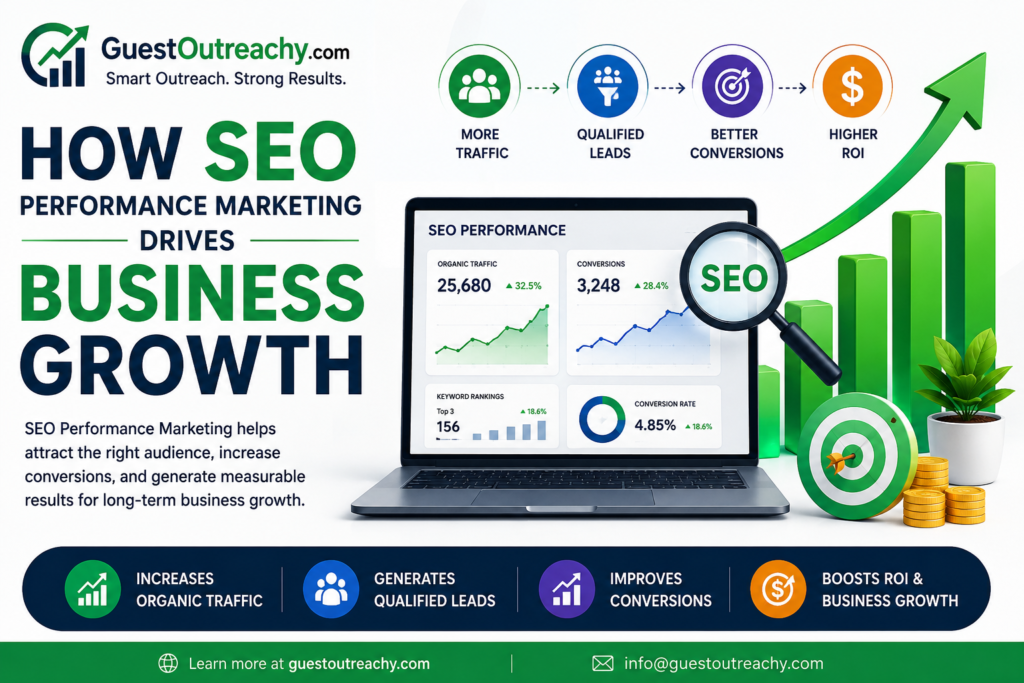
SEO contributes directly to business growth by increasing online visibility and attracting users with high purchase intent.
Benefits
- Increases organic website traffic
- Improves keyword rankings
- Generates qualified leads
- Builds brand credibility
- Increases conversion opportunities
- Supports long-term revenue growth
- Reduces customer acquisition costs
A well-executed SEO strategy creates lasting results without relying entirely on paid advertising.
Key Components of SEO Performance Marketing
Every successful SEO campaign is built on several core elements.
Essential Components
- Keyword research
- On-page SEO optimization
- Technical SEO improvements
- High-quality content creation
- Link building
- Local SEO
- Conversion rate optimization (CRO)
- Analytics and reporting
Combining these elements creates a strong foundation for sustainable business growth.
Benefits of SEO Performance Marketing for Growth
Businesses invest in SEO because it delivers measurable and long-term results.
Major Benefits
- Higher organic traffic
- Better search engine rankings
- Increased brand awareness
- Improved user experience
- Higher conversion rates
- Better return on investment (ROI)
- Sustainable long-term growth
SEO continues generating value long after content is published and optimized.
SEO Performance Marketing vs Traditional Digital Marketing
Both strategies have value, but SEO offers stronger long-term returns.
| SEO Performance Marketing | Traditional Digital Marketing |
|---|---|
| Generates organic traffic | Often relies on paid traffic |
| Long-term growth | Short-term campaigns |
| Lower long-term marketing cost | Continuous ad spending |
| Measurable SEO metrics | Limited organic insights |
| Builds website authority | Focuses mainly on advertising |
Businesses often achieve the best results by combining SEO with other digital marketing channels.
Common SEO Performance Marketing Mistakes
Avoiding common mistakes can improve campaign performance and rankings.
Common Mistakes
- Ignoring search intent
- Choosing the wrong keywords
- Publishing low-quality content
- Neglecting technical SEO
- Slow website speed
- Poor mobile optimization
- Not monitoring SEO performance
Regular audits help identify and fix these issues before they affect results.
Best Practices to Achieve SEO Growth
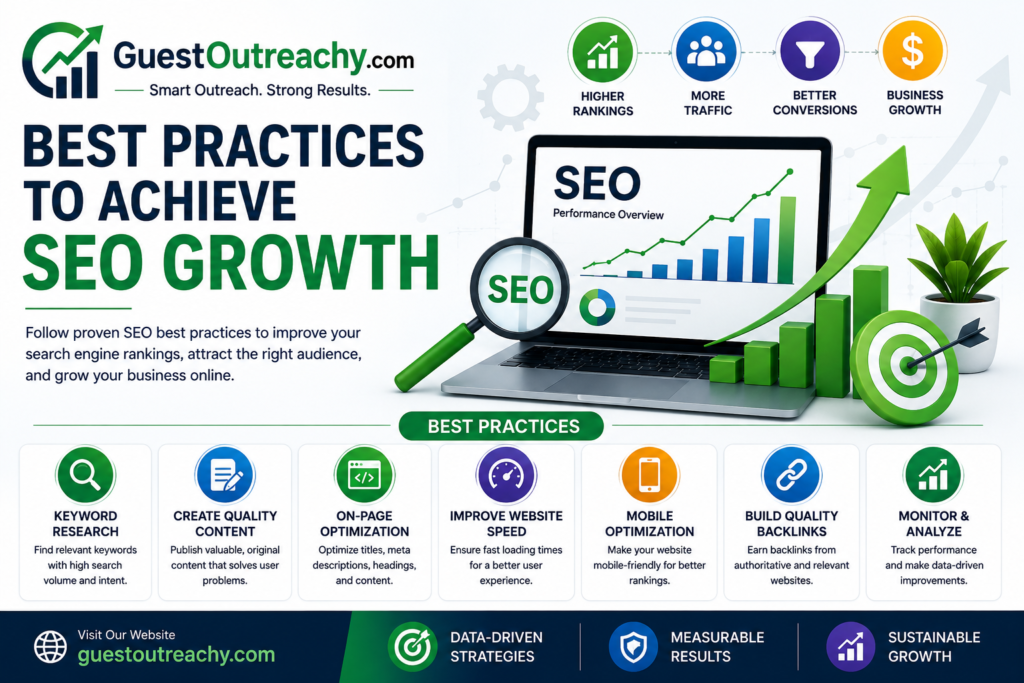
Following proven SEO techniques increases visibility and business performance.
Best Practices
- Publish helpful, original content
- Optimize title tags and meta descriptions
- Improve Core Web Vitals
- Build quality backlinks
- Strengthen internal linking
- Optimize for mobile devices
- Update existing content regularly
Consistency is one of the most important factors in long-term SEO success.
Essential SEO Metrics to Track
Tracking the right metrics helps measure campaign effectiveness.
Important Metrics
- Organic traffic
- Keyword rankings
- Click-through rate (CTR)
- Conversion rate
- Bounce rate
- Average session duration
- Backlinks
- Domain Authority
- Return on Investment (ROI)
Monitoring these KPIs helps businesses continuously improve their SEO strategy.
Example SEO Performance Marketing Strategy
| SEO Activity | Goal | Expected Result |
|---|---|---|
| Keyword Research | Target user intent | Better keyword rankings |
| On-Page SEO | Improve content relevance | Higher CTR |
| Technical SEO | Improve site performance | Faster indexing |
| Content Marketing | Build authority | More organic traffic |
| Link Building | Increase trust | Higher domain authority |
| Performance Tracking | Measure SEO success | Better ROI |
Example: An eCommerce business publishes SEO-optimized buying guides, improves page speed, and earns backlinks from industry blogs. Over several months, organic traffic grows, keyword rankings improve, and more visitors convert into customers.
Best Practices vs Common Mistakes
| Best Practices | Common Mistakes |
|---|---|
| Research user intent | Targeting irrelevant keywords |
| Create high-quality content | Publishing duplicate or thin content |
| Optimize website speed | Ignoring Core Web Vitals |
| Build quality backlinks | Buying spammy backlinks |
| Monitor SEO analytics | Never tracking performance |
| Update old content | Leaving outdated pages unchanged |
Following SEO best practices helps improve rankings while avoiding penalties and wasted marketing efforts.
Frequently Asked Questions
What is SEO Performance Marketing for Growth?
It is a marketing strategy that combines SEO techniques with performance measurement to increase organic traffic, generate leads, and improve business growth.
How does SEO help business growth?
SEO increases online visibility, attracts qualified visitors, improves user experience, and generates long-term organic traffic that can lead to more sales.
Is SEO better than paid advertising?
SEO provides sustainable long-term results, while paid advertising delivers immediate but temporary traffic. Many businesses use both together for the best outcome.
How long does SEO take to show results?
Most websites begin seeing measurable improvements within 3 to 6 months, depending on competition, website quality, and optimization efforts.
Which tools help measure SEO performance?
Popular tools include Google Analytics, Google Search Console, Ahrefs, SEMrush, Moz, and Screaming Frog.
Conclusion
SEO Performance Marketing for Growth is one of the most effective digital marketing strategies for businesses looking to increase organic traffic, generate qualified leads, and achieve measurable long-term success. By focusing on keyword research, technical SEO, content marketing, performance tracking, and continuous optimization, businesses can improve search engine rankings and maximize their return on investment. A well-planned SEO performance strategy not only enhances online visibility but also creates sustainable growth in an increasingly competitive digital landscape.