
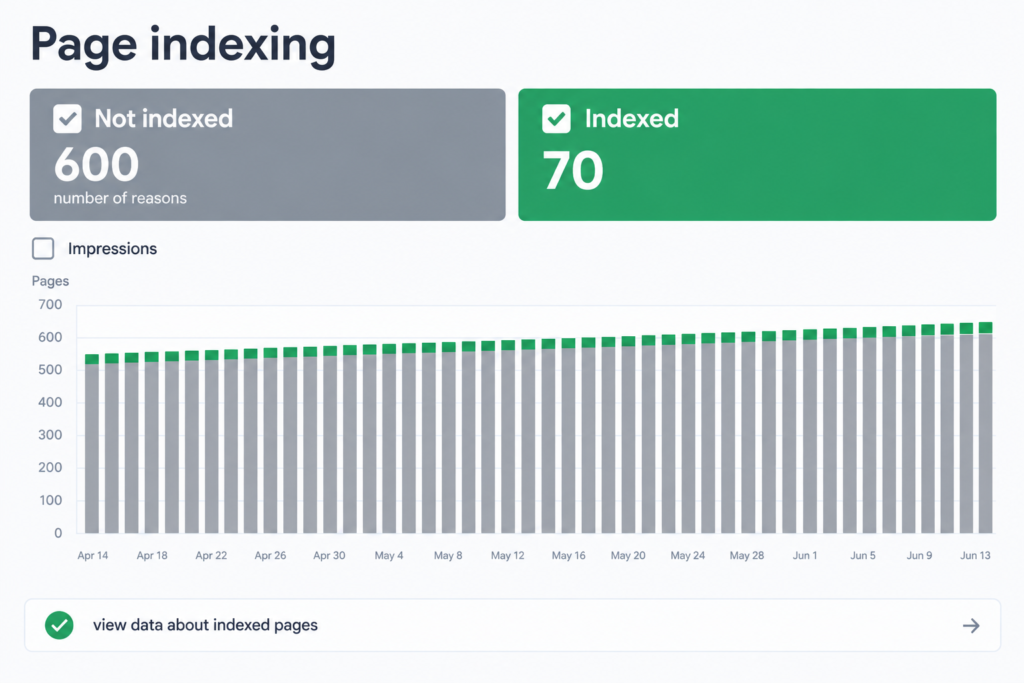
If you opened your Page Indexing report in Google Search Console this week and noticed a gap in the graph around June 2026, you are not imagining it, and your site did not suddenly lose indexed pages. Search Engine Land reported on September 11 2026 that the missing days are affecting every property in Search Console at once, which is the clearest sign this is a data logging problem and not anything happening to your actual site.
Table of Contents
What Happened
Site owners started noticing several days of blank data sitting inside the June 2026 section of their Page Indexing reports. The gap shows up as a visible dip on the left side of the graph, right where June data should be. Dan Lauer was among the first to flag it publicly, and coverage spread quickly once other SEOs checked their own accounts and saw the same pattern.
John Mueller from Google responded directly, explaining that the gap traces back to a known delay in how Search Console logged data during that period in June. According to Mueller, the missing days were never recorded in the first place, so there is nothing sitting in a backup waiting to be restored. He also confirmed that Search Console does not retroactively backfill indexing data once a gap like this exists, and said he would check with the team internally once they returned from a break, mainly to confirm the scope of the issue and not to fix it.
Why This Is Not an Indexing Problem
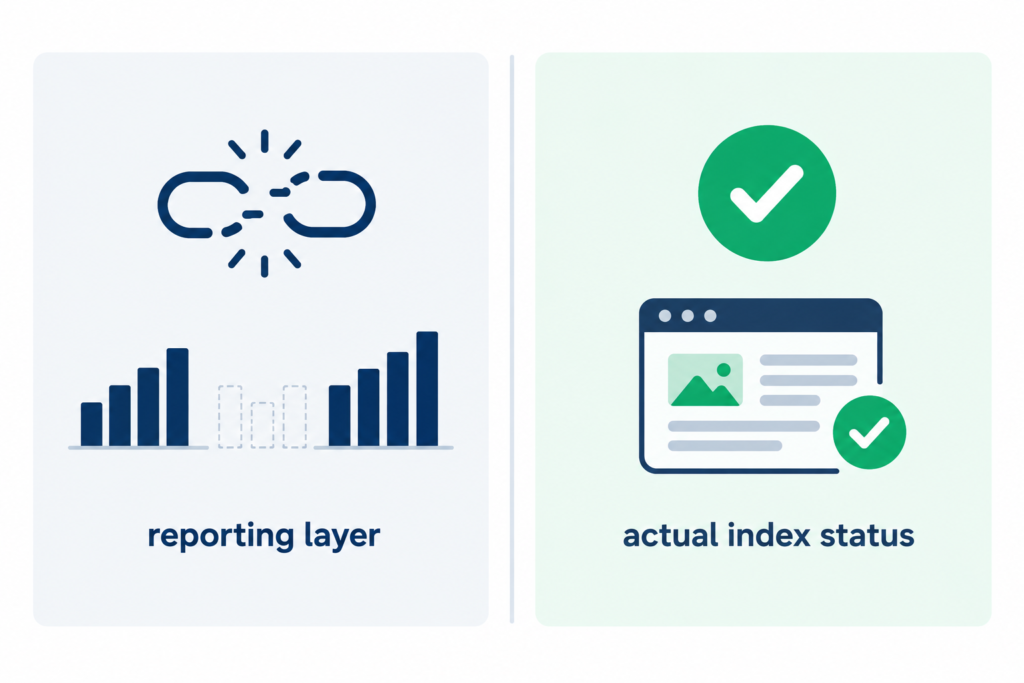
The most important thing to separate here is the difference between a reporting gap and an actual indexing issue. A real indexing problem means Google is choosing not to index specific pages, usually for reasons tied to quality, duplication, crawl budget, or a technical block. This situation is different. The pages themselves were indexed normally during June. What broke was the system that records and displays that data inside the report, not the underlying indexing decision Google made about your content.
This distinction matters because it directly affects what action, if any, makes sense on your end.
| Situation | What It Means | What To Do |
|---|---|---|
| A gap in historical June 2026 data only | Reporting delay already confirmed by Google | Nothing, this cannot be recovered or fixed |
| Pages missing from the index right now | Real indexing decision or crawl issue | Investigate through URL Inspection and site quality review |
| Sudden drop in current impressions or clicks | Could be ranking related or a separate reporting bug | Check Performance report trends over several weeks before reacting |
A Broader Pattern of Search Console Reliability Issues
Search Console has had a genuinely rough stretch through 2026, and this June gap fits directly into a pattern rather than standing alone. Earlier in the year, a logging error caused Search Console to inflate impression counts across nearly every site in the world for close to a year, from May 2025 through late April 2026, before Google quietly corrected it going forward without reconstructing the affected historical window.
In early September, a separate short lived bug caused pages across many properties to briefly display as crawled but not indexed, even though nothing had actually changed about how those pages were being treated. Mueller confirmed that one as well, describing it as a brief internal blip that resolved on its own within hours.
Seen together, these incidents point to something worth understanding rather than panicking over. Search Console reporting and actual Google Search behavior are not always the same signal at the same moment. The report is a window into what happened, and that window occasionally gets smudged without the underlying reality changing at all.
What To Do About Search Console Missing June Data
There is no fix available on the site owner side for this specific gap, since Google has already confirmed the data itself no longer exists to display. That said, a few practical steps are worth taking.
Check whether the gap is limited to June 2026 and does not extend into July, August, or September data on your own property. A gap that spreads beyond the confirmed window could indicate something separate worth reporting to Google directly rather than assuming it is part of this same known issue.
Avoid requesting reindexing for pages just because they sit inside that missing date range. Since the report itself has no data for that period, there is nothing to compare against, and resubmitting URLs will not restore historical reporting that was never logged.
Keep a screenshot of your own indexing history where possible going forward. Relying entirely on Search Console as a permanent record has a real limitation now that this is the second confirmed multi month data reliability issue within the same year.
Cross check any concerning indexing numbers against actual server logs or a third party crawling tool if your site is important enough to justify that extra layer of verification. Search Console remains useful, but 2026 has made a strong case for not treating it as the single source of truth.
How to Tell the Difference Between a Reporting Bug and a Real Problem
A genuine indexing problem usually comes with supporting evidence beyond just a gap in one report. Watch for these signals together instead of reacting to Search Console data alone.
Real organic traffic actually drops in analytics, not just the number shown inside Search Console. A reporting bug typically leaves actual visitor numbers untouched, since the underlying indexing and ranking behavior never changed.
The URL Inspection tool shows a specific page as genuinely not indexed when checked live, instead of the historical graph simply having a gap for a past date range.
The issue is isolated to your site rather than confirmed as affecting Search Console broadly. Wide scale bugs like this June gap tend to get confirmed quickly by Google staff once enough site owners report the same pattern, exactly as happened here within a day of the first public report.
What This Means for How You Track Site Health
Anyone managing SEO for a business, including through guest posting services meant to build long term site authority, benefits from treating Search Console as one signal among several rather than the definitive record of how a site is performing. Diversifying where you track performance, whether through server logs, a separate analytics platform, or periodic manual spot checks, reduces how much a single platform level bug can disrupt your ability to understand what is actually happening on your site. If you are also reviewing your broader outreach strategy, our services page covers the kind of ongoing audit habits that make sudden platform hiccups like this one far less disruptive to your overall approach.
Frequently Asked Questions
Will Google eventually restore the missing June 2026 data No. Google has confirmed that Search Console does not backfill indexing data once a gap like this exists, since the data was never recorded during that period rather than lost afterward.
Does this affect my actual search rankings or visibility No. This is a reporting display issue inside Search Console and not a change to how your pages are crawled, indexed, or ranked in actual search results.
Should I resubmit my sitemap or request reindexing because of this No. There is nothing wrong with your indexing status that resubmission would fix, since the underlying indexing behavior during June was never affected in the first place.
How can I tell if my site has a separate real indexing issue happening at the same time Check the URL Inspection tool for specific pages you are concerned about, and look at whether actual organic traffic in analytics has genuinely dropped rather than just a historical report showing a gap.
Is this connected to the earlier Search Console impressions bug from 2025 and 2026 Not directly, though both incidents point to a broader pattern of data reliability issues inside Search Console throughout 2026 rather than being the exact same technical problem.
Who first noticed the missing June data Dan Lauer was credited as one of the earliest to flag the pattern publicly, with Search Engine Land and other outlets confirming it quickly afterward once Google responded directly.
Final Thoughts
The missing June 2026 data inside Search Console is genuinely frustrating for anyone who relies on historical indexing trends, but it does not reflect any change to how your site is actually performing in Google Search. Google has been direct about the cause and equally direct that the gap will not be filled in later. The more useful takeaway sits a level above this single incident. Search Console has had enough reporting reliability issues through 2026 that treating it as a supplementary signal, rather than the sole record of site health, is simply the safer habit going forward.
Source: Search Engine Land, September 11 2026. For official guidance on how the Page Indexing report works, see the Search Console Help page on page indexing.