
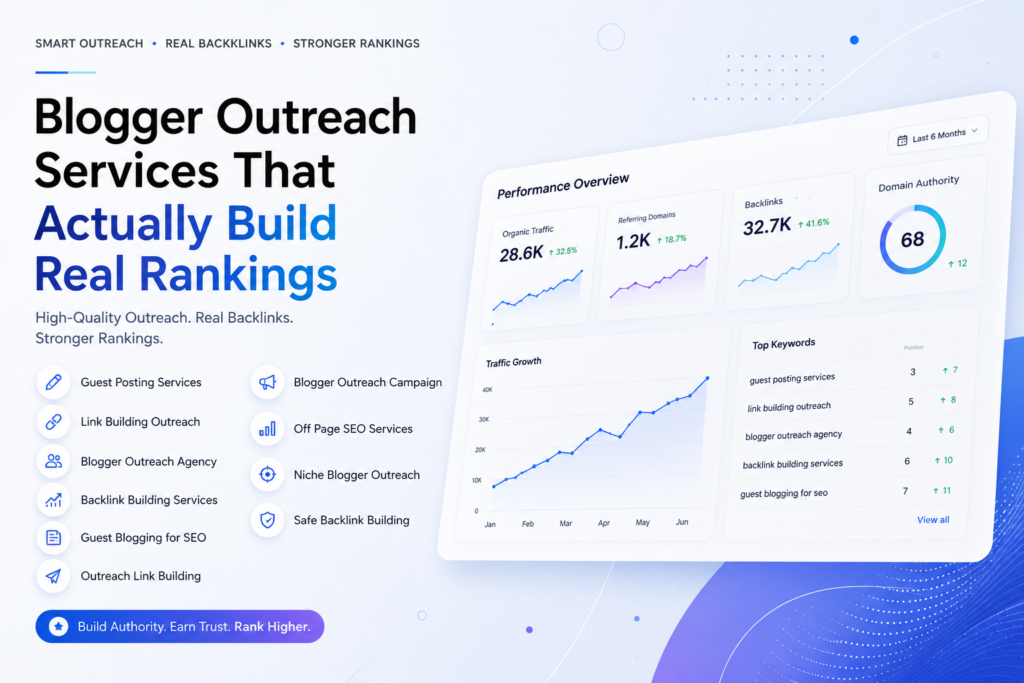
Every brand that wants to rank higher on Google eventually runs into the same wall. You can publish the best blog post in your niche, but if nobody links to it, search engines have little reason to trust it. This is where blogger outreach services come into the picture, and it is why so many marketing teams now treat outreach as a core part of their SEO budget rather than an afterthought.
Blogger outreach has quietly become one of the most dependable ways to earn backlinks that actually move the needle. Unlike paid ads that stop working the moment you stop paying, a well placed guest post or mention on a respected blog keeps sending traffic and link equity for years. But doing outreach well takes time, relationships, and a level of persistence most in house teams simply do not have room for. That gap is exactly what professional outreach services are built to fill.
This guide breaks down what blogger outreach services actually do, how to tell a genuine agency from a spammy link farm, what results you should realistically expect, and how to choose a provider that will protect your site rather than put it at risk.
Table of Contents
What Blogger Outreach Means and Why It Still Matters
Blogger outreach is the practice of connecting with bloggers, journalists, and website owners to get your brand, product, or content featured on their site. That feature might be a guest article, a product review, a mention within an existing post, or a link added to a resource page. The goal is almost always the same. Earn a backlink and some exposure from a site that already has an established, engaged audience.
Search engines like Google still weigh backlinks heavily when deciding how to rank a page. A link from a respected, relevant blog acts like a vote of confidence. The more relevant and authoritative that vote is, the more it helps your own site credibility. This is why outreach has not faded even as SEO tactics have evolved over the past decade. The underlying logic, that trusted sites vouching for you helps you rank, has not changed.
What has changed is the sophistication required to do it well. A decade ago, mass emailing hundreds of bloggers with generic pitches could work. Today, bloggers are flooded with outreach requests, and search engines have gotten much better at spotting manipulative link schemes. Successful outreach now depends on genuine relevance, a personalized pitch, and content that a blogger would actually want to publish because it benefits their readers, not just the sender.
Latest Update on How Google Is Treating Outreach and Links Right Now
Google’s recent activity through the middle of this year gives a clearer picture of what outreach practices are being rewarded and which ones are getting caught. In May, <cite index=”13-1″>Google quietly expanded its spam policy to explicitly cover manipulation of generative AI responses in Search, targeting things like content stuffed with fake citations or biased best of lists built purely to trick AI Overviews.</cite> That change matters directly for outreach, because roundup posts and best of lists are exactly the kind of placement many outreach campaigns chase.
The spam update that followed in June reinforced this direction. <cite index=”14-1″>That release targeted violations already covered under Google spam policies, including scaled content abuse, cloaking, sneaky redirects, and scraped content, while reportedly excluding link spam and site reputation abuse from its scope.</cite> In plain terms, Google is currently enforcing harder against thin, mass produced content and AI manipulation tactics, while its dedicated link spam enforcement continues to run quietly in the background through SpamBrain rather than through a single named update.
That does not mean link based tactics are safe. <cite index=”11-1″>By this point Google has gotten sharp enough at spotting unnatural backlinks that shortcuts like bulk bought links, private blog networks, and automated link drops rarely move rankings anymore, and more often end up costing sites the rankings they already had.</cite> On the content side, the pattern is consistent across every update this year
. <cite index=”9-1″>AI assisted content that is edited, accurate, and genuinely helpful stays within policy, while unedited mass production at scale invites demotion.</cite> For blogger outreach specifically, this means placements built around real expertise, honest reviews, and content a blogger actually stands behind are being accepted and rewarded, while manufactured placements, rented authority, and roundup posts engineered purely to game AI Overviews are the ones getting rejected.
What Blogger Outreach Services Actually Do
A blogger outreach service acts as the connective tissue between your brand and a curated list of relevant publishers. Instead of your team spending dozens of hours a week cold emailing bloggers who never respond, the agency handles prospecting, pitching, negotiation, and placement on your behalf.
Most reputable providers follow a similar workflow. They start by researching your niche to build a list of blogs that match your industry, audience, and domain authority goals. From there, they craft personalized pitches for each blogger rather than sending one templated email to a thousand recipients. Once a blogger agrees, the service coordinates the content, whether that is a guest post your team writes, an article the agency writes for you, or a product sample sent for an honest review.
Beyond placements, a good outreach partner also handles the less glamorous parts of the process. This includes tracking which pitches got responses, following up without becoming a nuisance, verifying that a blog traffic and audience are genuine rather than inflated with bots, and reporting back to you with the actual published links and relevant metrics. That reporting piece matters more than people expect, because it is the only way to know whether the campaign is delivering real value or just a list of links that look nice on paper.
Why Businesses Choose to Outsource Outreach Instead of Doing It In House
Doing outreach internally sounds appealing until a team actually tries it. Building a genuine relationship with a blogger takes multiple touchpoints, careful timing, and enough industry knowledge to know which publications are worth pursuing in the first place. Most internal marketing teams are already stretched across content calendars, social media, paid campaigns, and analytics, leaving little bandwidth for the slow, relationship driven work outreach demands.
There is also a steep learning curve involved in identifying which blogs are actually worth targeting. Not every site with a nice design and decent traffic numbers is a good link source. Some have artificially inflated metrics, some have been flagged by Google for spammy link practices, and others simply do not reach an audience that overlaps with your customers. Outreach agencies that have been doing this for years have already built databases of vetted publishers, which saves months of trial and error.
Cost efficiency plays a role too, even though outsourcing is not free. When you account for the salary of a dedicated outreach specialist, the tools needed for prospecting and verification, and the months it takes to build blogger relationships from scratch, hiring a service often works out cheaper per placement than building the function internally, especially for small and mid sized businesses that do not need a full time outreach hire.
How to Evaluate a Blogger Outreach Provider Before You Sign a Contract
Not all outreach services are created equal, and the difference between a good one and a bad one can mean the gap between steady ranking improvements and a Google penalty. The first thing worth checking is how the provider builds their blogger network. Ask directly whether the blogs they work with are genuinely relevant to your industry or whether they are part of a generic, catch all network used for every client regardless of niche.
Transparency around metrics is another major signal. A trustworthy agency will happily share domain authority, organic traffic estimates, and audience demographics for any blog they are proposing before a placement goes live. If a provider is vague about which sites they use or refuses to share a sample list, that is a red flag worth taking seriously.
It is also worth asking how content gets written and vetted. Some services allow bloggers full editorial control, which tends to produce more natural, higher quality placements. Others hand bloggers a pre written article with little room for customization, which can come across as promotional and gets rejected by better publishers more often. The strongest outreach partners strike a balance. They respect the blogger voice and audience while still hitting the SEO goals you are paying for.
Finally, look closely at how they talk about links. Any agency that promises a guaranteed number of do follow links for a flat, suspiciously low fee is very likely running a private blog network or paying for placements on low quality sites that exist purely to sell links. Google actively penalizes sites caught buying links at scale, and if your outreach provider is doing that on your behalf without telling you, your site carries the risk, not theirs.
Ethical Outreach Versus Risky Link Buying
There is an important distinction between legitimate blogger outreach and pure link buying, even though the two can look similar on the surface. Ethical outreach centers on relevance and value. The blogger agrees to feature your brand because the content genuinely fits their audience, and any compensation, if there is any, is disclosed and does not violate a platform guidelines.
Link buying, on the other hand, treats blogs as inventory. Agencies running this model maintain networks of low effort sites built solely to host paid links, often stuffed with thin content and irrelevant topics thrown together to look legitimate. <cite index=”12-1″>Google has been consistent about the distinction it draws here, making clear that manufactured links are worthless, counted links are a distraction, and rented authority is treated as a violation.</cite> The consequences of getting caught, ranging from lost rankings to full manual penalties, can undo years of organic growth in a matter of weeks.
The safest approach is to ask potential providers directly how they handle compensation and disclosure. Reputable agencies are usually comfortable explaining their process because they are not hiding anything. If a provider dodges the question or gets defensive, that hesitation tells you more than any answer would.
What Results to Realistically Expect From an Outreach Campaign
One of the biggest frustrations businesses run into with outreach services is mismatched expectations. Outreach is not a quick win. Even the best campaigns typically take a few months before you see measurable ranking movement, because search engines need time to crawl new links, assess their context, and factor them into how they evaluate your site.
A realistic first quarter usually looks like a handful of quality placements on relevant blogs, some referral traffic from those posts, and early signs of improved visibility for target keywords. The compounding effect tends to show up later, around the four to six month mark, as more links accumulate and search engines build a fuller picture of your site authority in its niche.
It is also worth setting expectations around volume versus quality. A campaign that produces five placements on genuinely respected, relevant blogs will usually outperform one that produces fifty placements on low authority, unrelated sites. If a provider is measuring success purely by the number of links delivered rather than the relevance and authority of those links, the campaign is likely optimized for a report that looks impressive rather than results that actually help your rankings.
Industries That Benefit Most From Blogger Outreach
While almost any business with an online presence can benefit from outreach, certain industries tend to see outsized returns. E commerce brands frequently use outreach to secure product reviews and roundup mentions on lifestyle and niche interest blogs, which drives both backlinks and direct, ready to buy traffic. SaaS and tech companies often lean on outreach to get featured in comparison articles, tool roundups, and industry publications where potential customers are already researching solutions.
Local businesses, though sometimes overlooked in outreach conversations, can also benefit significantly by connecting with regional bloggers, community sites, and local news outlets. These placements tend to carry strong relevance signals for local SEO, helping a business show up more prominently for location based searches, alongside the usual authority benefits.
Health, finance, and legal brands face a slightly different situation because these are considered highly sensitive topics by Google, meaning the bar for trustworthy sources is much higher. Outreach in these industries requires extra care to secure placements only on genuinely authoritative, well established publications, since a link from a low quality health blog can do more harm than good in these particularly scrutinized niches.
Trends Shaping Blogger Outreach Services Right Now
Outreach has evolved noticeably in recent updates, largely driven by changes in how Google evaluates content, trust, and links. There is a stronger emphasis now on topical relevance over raw domain authority numbers, alongside a sharper focus on proof of real experience. <cite index=”2-1″>Google’s Search Quality Rater Guidelines increasingly tie trust to sources, particularly on health, money, safety, civic, and news topics, favoring pages that show first hand testing, dates, tools used, and outcomes readers can actually verify.</cite> A guest post or feature that reads as genuinely written by someone with real experience in the topic now carries more weight than one that simply hits a keyword count.
Video and multimedia integration has also become part of many outreach strategies, with agencies helping brands secure spots not just in written posts but in blogger video reviews, podcast mentions, and newsletter features, recognizing that modern bloggers often operate across several content formats rather than a blog alone.
There has also been a noticeable shift toward long term partnerships over one off placements. Instead of a single guest post, more brands are working with the same trusted bloggers repeatedly, building an ongoing relationship that produces multiple mentions over time. This approach tends to look far more natural to search engines than a burst of links appearing all at once, and it often produces stronger, more consistent referral traffic as the blogger audience becomes familiar with the brand.
How to Vet an Outreach Provider Before You Commit
Before signing with any outreach provider, spend time researching their actual track record rather than relying solely on their sales pitch. Case studies are a good starting point, but ask specifically for examples in your industry, since a portfolio full of unrelated niches does not tell you much about how the agency would perform for your business.
Third party reviews on independent platforms are worth checking too, paying close attention to how a provider responds to negative feedback, if any exists. A single bad review is not necessarily disqualifying, but a pattern of complaints about spammy links, missed deadlines, or unresponsive communication is worth taking seriously.
It is also reasonable to ask a provider for a short trial period or a small initial batch of placements before committing to a large, long term contract. This gives you a low risk way to evaluate their process, communication style, and the actual quality of the blogs they secure, before larger budgets are on the line.
How Blogger Outreach Fits Into a Broader SEO Strategy
Outreach works best when it is not treated as a standalone tactic but as one part of a coordinated SEO strategy. Backlinks earned through outreach are far more effective when they point to genuinely strong content on your site, whether that is a well researched guide, useful tool, or original piece of data other sites want to reference.
Pairing outreach with solid on page SEO, technical site health, and a consistent content publishing schedule creates a compounding effect. The backlinks help search engines discover and trust your content faster, while strong on site content gives visitors and bloggers alike a reason to stick around, share, and link back on their own, sometimes without any outreach involved at all.
Many successful campaigns also use outreach to support specific content pieces designed to attract links naturally, often called linkable assets. These might be original research, interactive tools, or comprehensive guides on a topic bloggers in the space are actively looking to reference. Outreach then becomes the mechanism that gets that asset in front of the right people, rather than the sole strategy carrying the entire SEO effort on its own.
Frequently Asked Questions
What is the average cost of blogger outreach services? Pricing varies widely depending on the quality of blogs targeted and the scope of the campaign, but most agencies charge per placement, per link, or as a monthly retainer. Higher authority, niche relevant blogs generally cost more to secure than smaller or less established sites.
How long does it take to see results from a blogger outreach campaign? Most businesses start noticing early signs of improvement within two to three months, with more substantial ranking movement typically appearing between four and six months as more links accumulate and search engines fully process them.
Are blogger outreach services worth it for a small business? Yes, provided the agency targets genuinely relevant blogs rather than chasing volume. Small businesses often see strong returns from a handful of well placed, relevant links rather than a large number of low quality ones.
Can blogger outreach hurt my website SEO? It can, if the provider uses manipulative tactics like private blog networks, irrelevant low quality link farms, or roundup posts built purely to manipulate AI Overviews. Choosing a transparent agency that discloses its blogger network and avoids these tactics significantly reduces this risk.
What is the difference between guest posting and blogger outreach? Guest posting is one specific tactic within the broader practice of blogger outreach. Outreach can also include product reviews, brand mentions, resource page listings, and other forms of collaboration beyond just contributing a full article.
How do outreach agencies find bloggers to contact? They typically use a mix of specialized outreach tools, manual research, and existing relationships built over years of campaigns, filtering prospects by relevance, traffic quality, and domain authority before ever sending a pitch.
Do I need to write the content myself for a guest post placement? It depends on the provider. Some agencies write content on your behalf as part of the service, while others expect the client to supply the article. Clarify this upfront, since it significantly affects both pricing and turnaround time.
Is blogger outreach still effective given how much Google has changed recently? Yes. Google’s recent enforcement has focused on manufactured links, rented authority, and content manipulated for AI Overviews, not on genuine outreach. Placements built around real expertise and honest coverage remain one of the more reliable ways to build authority and earn organic referral traffic.
Final Thoughts
Blogger outreach services offer a practical solution to one of SEO most persistent challenges. Earning the kind of authoritative, relevant backlinks that genuinely move rankings, without draining months of internal time and resources. The value is not in the sheer number of links a service can produce, but in the relevance, quality, and authenticity of each placement they secure on your behalf.
Choosing the right partner comes down to transparency. A provider willing to show you exactly which blogs they work with, how they compensate publishers, and how they measure success is far more likely to protect your site long term health than one promising fast, guaranteed results at a bargain price. Approached carefully, blogger outreach remains one of the more dependable ways to build lasting authority, earn real traffic, and strengthen your brand presence across the sites your audience already trusts.