
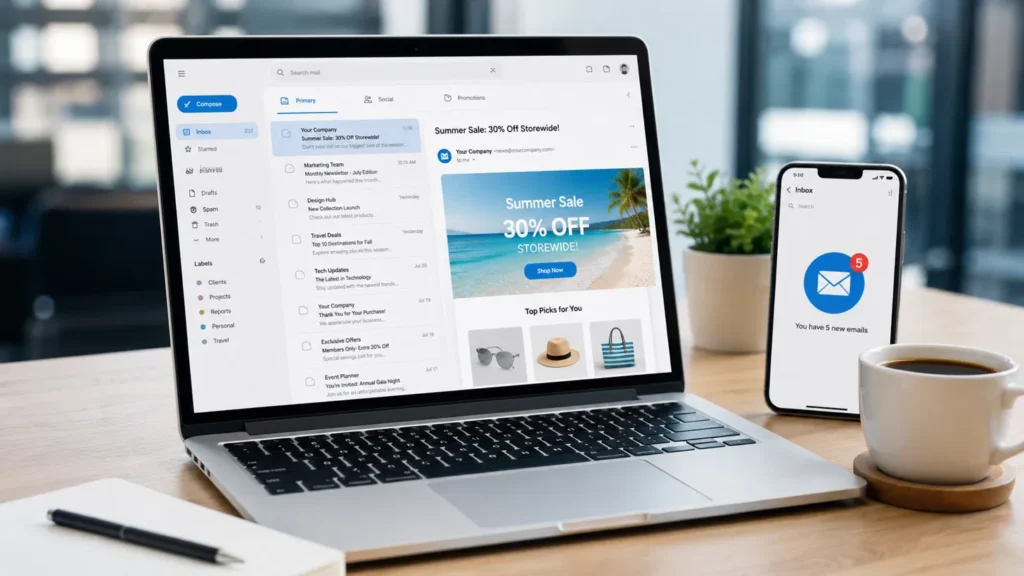
Email remains one of the most reliable ways for businesses to reach an audience directly, without fighting an algorithm for visibility. Yet many marketers still struggle to turn their email campaigns into a consistent source of revenue. This resource breaks down everything you need to know, from the fundamentals to the latest trends, so you can build campaigns that people actually want to open, read, and act on.
Whether you are launching your very first newsletter or trying to rescue a list that has gone stale, the principles below apply. These campaigns are not about sending more messages. They are about sending the right message to the right person at the right moment. Get that formula right, and email becomes one of the highest return channels in your entire marketing stack.
What This Marketing Approach Actually Means
Email marketing campaigns are coordinated sequences of emails sent to a specific audience segment with a defined goal, such as driving sales, nurturing leads, or building brand loyalty. Unlike a single one off email blast, a campaign usually involves multiple touchpoints working together toward one outcome, whether that is promoting a product launch, welcoming new subscribers, or recovering abandoned carts.
At their core, these campaigns rely on permission based communication. Subscribers have opted in to hear from a brand, which makes email fundamentally different from cold outreach or paid advertising. This opt in relationship is what makes this type of campaign so valuable: you are speaking to people who have already expressed interest, which typically translates into higher engagement and conversion rates compared to channels where you are interrupting someones attention.
A well structured campaign also has a clear narrative arc. It might start with an introductory email that sets expectations, followed by value driven content that builds trust, and finally a call to action that asks the subscriber to make a decision. This structure separates professional email marketing from random, disconnected sends that confuse subscribers and hurt deliverability over time.
Why This Channel Still Matters
Some marketers assume email is outdated compared to social media or short form video, but the data tells a different story. These campaigns consistently deliver some of the highest return on investment of any digital channel because businesses own their email list outright. Recent email marketing benchmarks from Klaviyo confirm that automated email flows continue to generate a disproportionate share of total email revenue compared to standard campaigns, which shows why building a strong email program pays off over time. Unlike a social media following, which can disappear overnight due to algorithm changes or platform bans, an email list is an asset the business fully controls.
Email also offers a level of precision that other channels struggle to match. Marketers can segment audiences by behavior, purchase history, location, or engagement level, then tailor messaging accordingly. This precision means your campaigns can speak to a first time visitor differently than a loyal repeat customer, creating a more relevant experience that drives better results for both parties.
Another reason email endures is its compatibility with automation. Once a campaign is built, it can run continuously in the background, nurturing new subscribers or recovering lost sales without requiring daily manual effort. This scalability is part of why so many businesses, from solo entrepreneurs to enterprise brands, continue investing heavily in their email programs year after year.
Types of Email Marketing Campaigns
Welcome Series Campaigns
The welcome series is often the highest performing campaign a brand will ever send, simply because new subscribers are at their most engaged right after signing up. A strong welcome sequence introduces the brands story, sets expectations for future emails, and often includes an incentive such as a discount code or free resource to encourage a first purchase.
Beyond the first email, a welcome series typically unfolds over several days, gradually deepening the relationship. One email might highlight bestselling products, another might share social proof like testimonials, and a final email might present a limited time offer. This gradual approach respects the subscribers attention while steadily building toward a conversion.
Promotional Campaigns
Promotional campaigns are designed around a specific offer, such as a seasonal sale, flash discount, or new product launch. These campaigns tend to have a clear deadline, which creates urgency and encourages faster decision making from the audience.
The best promotional campaigns do more than announce a discount. They build anticipation beforehand and follow up afterward. A pre launch teaser, a launch day announcement, and a last chance reminder often work together as a mini series rather than a single isolated email. This layered approach tends to outperform a single promotional blast because it gives subscribers multiple opportunities to engage.
Newsletter Campaigns
Newsletters are recurring campaigns, typically sent weekly or monthly, that focus on providing consistent value rather than pushing a hard sell every time. They might include industry insights, company updates, curated content, or behind the scenes stories that keep the brand top of mind.
Because newsletters are less transactional, they play a critical role in long term trust building. Subscribers who consistently receive helpful, non salesy content are more likely to open future promotional emails and remain loyal to the brand over time. A thoughtful newsletter strategy essentially keeps the relationship warm between larger sales pushes.
Abandoned Cart and Re engagement Campaigns
Abandoned cart campaigns target shoppers who added items to their cart but left without completing the purchase. These are among the most profitable campaigns you can run because the recipient has already demonstrated strong purchase intent. The email simply needs to remove friction or add a small incentive to close the sale.
Re engagement campaigns, on the other hand, target subscribers who have gone quiet over time. These emails might ask directly whether the subscriber still wants to hear from the brand, offer a special incentive to reactivate interest, or simply remind them of what they have been missing. Running these campaigns regularly helps protect list health and sender reputation, since inactive subscribers can quietly damage deliverability if left unaddressed.
How to Plan a Successful Email Marketing Campaign
Define Goals and Audience Before Anything Else
Every successful campaign starts with a clearly defined goal. Are you trying to drive immediate sales, grow brand awareness, collect feedback, or nurture leads toward a future purchase? The goal shapes every subsequent decision, from subject line tone to call to action placement, so skipping this step often leads to unfocused campaigns that confuse subscribers.
Alongside the goal, marketers need a precise understanding of who they are speaking to. A campaign aimed at first time website visitors should read very differently from one aimed at repeat customers who already trust the brand. Building simple audience personas, even informal ones, helps ensure the messaging, tone, and offer actually resonate with the people receiving it.
Choosing the Right Email Marketing Platform
The platform behind your campaigns has a direct impact on what is possible, from automation capabilities to segmentation depth and analytics reporting. Popular platforms differ in pricing, ease of use, and advanced features like predictive send time optimization or AI assisted subject line testing, so it is worth evaluating a few options against your specific needs rather than defaulting to whichever tool is most talked about.
Smaller businesses often prioritize ease of use and affordable pricing tiers, while larger organizations may need more robust segmentation, deeper integrations with customer relationship management systems, and enterprise level deliverability support. Regardless of size, the right platform should make it straightforward to build automated sequences, track performance, and maintain compliance with email regulations. If your broader marketing strategy also depends on organic visibility, pairing your email program with support from an experienced digital marketing services team can help align email, SEO, and content efforts under one cohesive plan.
Building Your Email List the Right Way
A high performing email list is built on genuine consent, not shortcuts. Purchased lists or scraped contact databases might seem like a fast way to grow numbers, but they almost always backfire, resulting in high spam complaints, poor engagement, and damaged sender reputation that can take months to repair. The healthiest lists grow organically through opt in forms, lead magnets, and clear value exchanges.
Effective list building often centers on offering something genuinely useful in exchange for an email address, such as a discount, a downloadable resource, or exclusive access to content. The key is ensuring the incentive attracts people who are actually likely to become customers, rather than bargain hunters who will never engage again after claiming the offer.
It is equally important to make the signup process frictionless. Long forms with excessive fields tend to suppress conversions, while a simple email field with a clear value proposition tends to perform far better. Once someone subscribes, a prompt confirmation and an immediate first email help reinforce that the signup was successful and set the tone for the relationship ahead. Growing your list also benefits from strong organic traffic, so many brands combine their signup forms with ongoing SEO services to attract more qualified visitors who are likely to subscribe in the first place.
Crafting Subject Lines That Get Opened
The subject line is the single biggest factor determining whether an email gets opened at all, which makes it one of the most important elements of any email marketing campaign. Strong subject lines are specific, create curiosity or urgency, and avoid sounding like generic spam. Vague phrases or excessive punctuation tend to suppress open rates and can even trigger spam filters.
Personalization within subject lines, such as referencing a subscribers name, location, or past behavior, often boosts open rates because it signals relevance immediately. However, personalization should feel natural rather than forced. Overusing merge tags or including irrelevant details can come across as robotic and reduce trust.
Testing is essential here. Running small A/B tests on subject lines, even with just two variations sent to a portion of the list before the winner goes to everyone else, provides real data instead of guesswork. Over time, this testing builds a clearer picture of what language, tone, and length resonate best with a specific audience.
Designing Emails That Convert
Structuring Content for Readability
Well designed campaigns respect how people actually read on mobile devices, which now account for the majority of email opens. This means short paragraphs, clear visual hierarchy, and a single obvious call to action rather than multiple competing links that dilute focus. Cluttered emails with too many messages tend to underperform simple, focused ones.
Visual elements like images and buttons should support the message rather than overwhelm it. Heavy image only emails can trigger spam filters and fail to load properly for some recipients, so balancing visuals with plain text ensures the message still comes through even if images are blocked. A clean layout with generous white space consistently outperforms cluttered designs in engagement metrics.
Writing Copy That Drives Action
The body copy of an email should speak directly to the subscribers needs rather than simply listing product features or company achievements. Framing benefits around what the reader gains, rather than what the brand offers, tends to produce stronger engagement because it keeps the focus on the recipients interests.
Calls to action deserve particular attention. A single, clear, action oriented button, such as Shop the Sale or Claim Your Spot, tends to perform better than vague alternatives like Click Here. Placing the call to action prominently, and repeating it once further down in longer emails, gives subscribers multiple chances to act without feeling pressured.
Personalization and Segmentation Strategies
Segmentation is what separates generic mass emails from genuinely effective campaigns. By dividing a list based on factors like purchase history, browsing behavior, engagement level, or demographic data, marketers can send messages that feel individually relevant rather than broadly generic. This relevance is directly tied to higher open rates, click through rates, and conversions.
Behavioral segmentation, in particular, tends to produce strong results because it responds to what a subscriber has actually done rather than assumptions about who they are. Someone who recently browsed a specific product category, for example, is a far better candidate for a targeted follow up than someone who has never interacted with that category at all.
Personalization goes beyond inserting a first name into an email. True personalization considers timing, content, and offers tailored to where a subscriber sits in their relationship with the brand. A brand new subscriber and a five year loyal customer should rarely receive identical messaging, since their needs, trust levels, and purchase triggers differ significantly.
Timing and Frequency Best Practices
Send timing can meaningfully affect open and click rates, though the ideal time varies by audience and industry. Rather than relying purely on generic best practice advice, it is worth testing send times against your specific list to see when your audience is most responsive, since behavior can vary based on time zones, occupations, and daily habits.
Frequency is equally important and often mismanaged. Sending too rarely causes subscribers to forget why they signed up, while sending too frequently leads to fatigue, higher unsubscribe rates, and spam complaints. Finding the right cadence usually requires monitoring engagement metrics over time and adjusting based on how the audience responds, rather than sticking rigidly to a fixed schedule regardless of performance.
Many successful campaigns use a tiered frequency approach, sending more frequently to highly engaged segments while reducing frequency for subscribers who show signs of disengagement. This adaptive approach helps maximize revenue from active subscribers while protecting the overall health and reputation of the list.
Measuring Success: Key Metrics to Track
Open rate, click through rate, and conversion rate remain the foundational metrics for evaluating these campaigns, but each tells a different part of the story. Open rate reflects subject line and sender reputation strength, click through rate reflects how compelling the content and offer were, and conversion rate reflects whether the landing experience actually closed the loop.
Beyond these basics, metrics like unsubscribe rate, spam complaint rate, and list growth rate offer critical insight into long term list health. A campaign might generate strong short term sales while quietly damaging the list through high unsubscribe rates, so it is important to evaluate performance holistically rather than focusing on a single number in isolation.
Revenue per email and customer lifetime value tied to email engagement are increasingly important for businesses trying to understand the true financial impact of their campaigns. These deeper metrics require more sophisticated tracking but ultimately provide the clearest picture of whether your campaigns are genuinely contributing to business growth, not just generating vanity engagement numbers. For context on how your numbers compare to others, industry benchmark data from Brevo shows the average open rate for marketing emails typically sits around twenty percent, giving you a useful reference point when evaluating your own results.
Common Mistakes to Avoid With This Strategy
One of the most frequent mistakes is neglecting list hygiene. Continuing to email inactive or invalid addresses hurts deliverability over time, since email providers track engagement signals when deciding whether to route messages to the inbox or the spam folder. Regularly removing unengaged subscribers, while first attempting a re engagement campaign, helps protect the senders overall reputation.
Another common error is failing to optimize for mobile devices. Since a majority of emails are now opened on phones, campaigns that are not mobile responsive frequently see poor engagement, regardless of how strong the actual offer or copy might be. Testing every campaign across devices before sending is a simple step that prevents avoidable losses in performance.
Overloading a single email with too many competing messages is another pitfall. Trying to promote multiple products, announce company news, and ask for a review all in one email typically dilutes the impact of each individual message. Focused, single purpose emails consistently outperform cluttered ones because they make it easy for the reader to understand exactly what action to take.
Latest Trends Shaping This Space
Artificial intelligence has become deeply embedded in modern email marketing, from AI generated subject line suggestions to predictive send time optimization that automatically chooses the best moment to reach each individual subscriber. These tools are helping marketers, particularly those without large teams, achieve levels of personalization that previously required significant manual effort.
Interactive email content is also gaining traction, with brands embedding elements like image carousels, countdown timers, and even simple surveys directly within the email body. This interactivity keeps subscribers engaged without forcing them to leave their inbox, which can meaningfully boost click through rates compared to static, text only formats.
Privacy focused changes across major email providers have also reshaped how marketers measure success. With open tracking becoming less reliable due to privacy protections built into some email clients, many marketers are shifting greater emphasis toward click through rates, conversions, and revenue based metrics rather than relying heavily on open rate alone. Staying current with these shifts is essential for anyone serious about running effective campaigns going forward.
Tools and Software Considerations for This Work
Choosing supporting tools beyond the core email platform can significantly influence campaign performance. Landing page builders, for instance, ensure that the experience after a click matches the promise made in the email, which directly affects conversion rates. A beautifully designed email that leads to a slow or mismatched landing page will consistently underperform.
Analytics and heatmap tools can also reveal how subscribers interact with email content once they click through to a website, providing insight that email platform dashboards alone cannot offer. Combining email analytics with on site behavior data gives a much fuller picture of what is actually driving or hindering conversions.
When evaluating any tool, it is worth prioritizing ease of integration with existing systems, since disconnected tools that require manual data transfer tend to create bottlenecks and errors over time. The most effective marketing stacks are ones where email platforms, customer relationship management systems, and analytics tools all communicate smoothly with one another.
Frequently Asked Questions
What makes an email marketing campaign successful? A successful campaign combines a clear goal, a well segmented audience, compelling subject lines, focused content, and a strong call to action. Consistent testing and monitoring of key metrics over time also play a major role in sustained success.
How often should I send these campaigns? There is no universal answer, since ideal frequency depends on the audience and industry. Most brands find success sending somewhere between one and four times per week, but the best approach is to test frequency against engagement metrics for your specific list.
What is a good open rate for these campaigns? Open rates vary significantly by industry, but many brands see rates between fifteen and twenty five percent as reasonably healthy. Rather than comparing directly to industry benchmarks, it is often more useful to track improvement against your own historical performance.
How do I reduce unsubscribes in my campaigns? Reducing unsubscribes typically involves setting clear expectations at signup, maintaining relevant segmentation, and avoiding excessive frequency. Providing genuine value in every send, rather than only promotional content, also helps subscribers stay engaged long term.
Do small businesses really need this kind of marketing? Yes, email remains one of the most cost effective channels available, even for very small businesses. Because the business owns the list outright, it provides a direct and reliable way to reach customers without depending on paid advertising or unpredictable social media algorithms.
What is the difference between a newsletter and a promotional campaign? A newsletter typically focuses on providing recurring value, such as updates or curated content, without necessarily asking for a purchase. A promotional campaign, on the other hand, is built around a specific time sensitive offer designed to drive immediate action.
How can I improve deliverability for my campaigns? Improving deliverability generally involves maintaining a clean list, avoiding purchased contacts, authenticating your sending domain properly, and monitoring engagement metrics to remove consistently inactive subscribers before they harm your sender reputation.
Should I automate my campaigns? Automation is highly recommended for recurring sequences like welcome series, abandoned cart reminders, and re engagement campaigns, since it allows these high value emails to run consistently without requiring manual effort for every new subscriber or event.
Conclusion
Email marketing campaigns continue to prove their value as one of the most direct, measurable, and cost effective ways to build relationships with an audience and drive consistent revenue. The brands that succeed with email are rarely the ones sending the most messages. They are the ones sending the most relevant messages, backed by thoughtful segmentation, strong subject lines, clean design, and ongoing testing.
Building a high performing email program takes time, but the fundamentals outlined throughout this resource provide a solid foundation for any business, regardless of size or industry. Start by clarifying your goals, respecting your audiences inbox, and committing to consistent measurement, and your campaigns will steadily become one of the most dependable growth channels in your entire marketing strategy.

