

Written by Zain Khan at Guest Outreachy. Last updated July 2026
Every few months a WordPress site owner opens Search Console and sees traffic quietly falling apart with no obvious cause. Nothing was changed on the site. No plugin broke. Yet the numbers keep sliding. In almost every case the real story is not a technical accident. It is a Google core update reassessing the whole web at once and finding the site was never built to survive one.
Good wordpress seo services are not the ones that produce a quick spike before the next update wipes it out. They are the ones built around whatever Google actually rewards this year which in 2026 has become fairly specific.
Table of Contents
What Google Actually Punished in Its 2026 Updates
The May 2026 core update and the June 2026 spam update both targeted the same underlying weakness. Sites with anonymous or generic authorship and thin content stretched to hit a word count and no real trust signals lost significant ground. In some cases this meant losing the majority of their traffic within weeks. Sites with named authors and real depth and a technically sound foundation were far more likely to hold steady or even gain.
This pattern is not new to 2026 but it has become sharper. A WordPress site relying on a narrow keyword trick or a single backlink tactic is now gambling every few months on whether that specific trick still works while a site built on the fundamentals below is not gambling at all.
The Foundation That Actually Held Up
| What Survived | What Got Hit |
|---|---|
| Named authors with real credentials | Generic bylines like Admin or Team |
| Content that fully answers the question | Thin pages padded to hit a word count |
| Fast and stable pages meeting Core Web Vitals | Slow and plugin heavy pages with layout shifts |
| Structured data that clarifies page purpose | Pages with no schema and unclear structure |
| A track record of consistent publishing | Sites that published in bursts then went quiet |
Core Web Vitals Are the Part Google Cannot Quietly Change
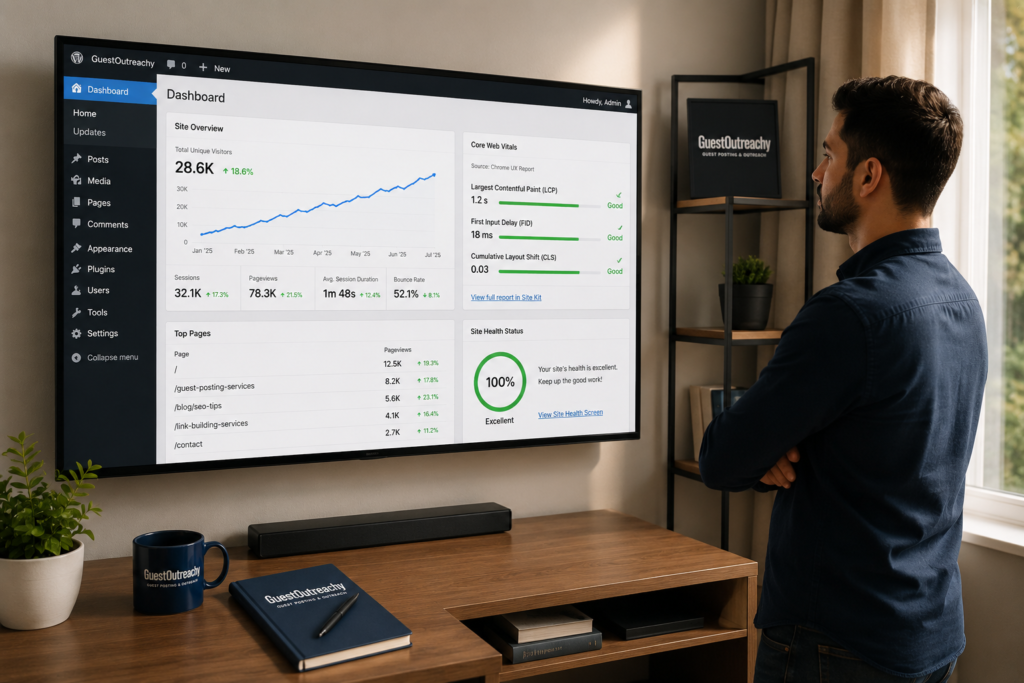
Unlike a content trend Core Web Vitals are a measured technical standard which is exactly why they tend to survive every update rather than being reshuffled by one. WordPress sites are especially exposed here because so many run a stack of plugins layered on top of each other for years without review.
| Metric | What It Measures | 2026 Target |
|---|---|---|
| LCP | Time for the main content to become visible | Under 2.5 seconds |
| INP | Responsiveness to clicks and taps | Under 200 milliseconds |
| CLS | How much the layout shifts while loading | Under 0.1 |
According to Google Core Web Vitals documentation these metrics reflect real user experience and function as a confirmed ranking factor most often deciding close ties between pages of similar relevance. A WordPress site quietly losing that tie breaker every day rarely finds out why until someone actually checks.
Why Thin Content Is the First Thing Good WordPress SEO Services Fix
According to Google helpful content guidance content should be created primarily for people rather than mainly to attract search traffic. Sites that ignore this tend to survive between updates purely by luck and that luck runs out eventually.
The sites that keep their rankings through update after update are the ones where every page fully answers what someone came to ask written by someone whose name and expertise are actually visible. This is also becoming more important for an entirely different reason. AI systems now pull directly from web pages to generate answers and a page that is vague or padded is both less likely to rank and less likely to be cited while a clear and specific page tends to win both at once. This is exactly why wordpress seo services built around real authorship and genuine depth tend to outlast any single ranking trick.
A Practical Update Resilience Checklist
Running a proper SEO audit is usually the fastest way to see where a site stands against the list below rather than guessing at it.
| Area to Check | What to Fix |
|---|---|
| Author bylines | Replace generic names with a real named author and short bio |
| Word count padding | Cut filler and make sure every paragraph earns its place |
| Plugin stack | Remove anything not actively improving speed or function |
| Schema markup | Add structured data that clearly defines what each page is |
| Publishing rhythm | Publish consistently rather than in occasional large bursts |
A Realistic Timeline for Building This Kind of Resilience
Fixing the technical layer usually shows results within a few weeks. Rewriting thin content and building genuine depth takes longer often three to six months before it fully shows in rankings. The real payoff appears at the next core update when a site holds its ground while thinner competitors lose theirs. Anyone promising immunity from every future update is overselling since nobody controls what Google changes next. What a site can control is whether it is built on fundamentals that have consistently mattered across update after update rather than a trick tied to one specific moment.
Where This Gets Handled Properly
Our own technical SEO services focus on exactly this foundation from Core Web Vitals and plugin health to the technical side of getting a WordPress site ready for both traditional search and AI citation.
A Few Questions WordPress Owners Actually Ask
Did the May and June 2026 updates really target specific things like this? Yes. Both updates were widely reported to affect sites with weak authorship signals and thin content more heavily than sites with genuine depth and named experts.
Can fixing Core Web Vitals alone protect a site from the next update? No. It removes one real disadvantage and helps win close ties but content still has to genuinely answer what someone is searching for. Both matter together.
Is it worth paying for wordpress seo services instead of handling this alone? For most owners without a technical background the time cost of learning Core Web Vitals fixes and schema markup and content restructuring properly often exceeds the cost of hiring it out especially since a mistake here can hurt rankings as easily as help them.
How many plugins are too many for a WordPress site? There is no fixed number. The real question is whether each plugin earns its performance cost rather than sitting unused while slowing the site down.
Final Thoughts
The WordPress sites still standing after every 2026 update are not the ones that found a clever shortcut. They are the ones that fixed the boring technical layer put a real name behind their content and stopped padding pages just to hit a word count. Good wordpress seo services are built around exactly this treating Core Web Vitals and authorship and genuine depth as one system rather than separate boxes to check once and forget.
Pingback: Sitemap Could Not Fetch? Causes and Fixes 2026